Banning teens from social media without knowing how
France bans social media for under-15s from September 2026 without saying who checks ages. The science says yes, Australia says no, and where does my ID go?
I'm for it. I'm saying that up front, because what follows is going to read like a list of complaints. France just banned social media for anyone under 15, the first country in the European Union to do so. On July 21, the Senate passed the law 243 to 2, and the National Assembly followed a few hours later, 279 to 811. A margin like that should reassure me. Except laws everyone agrees on are rarely laws anyone looked at closely. So here I am, sold on the principle and skeptical of almost everything else.
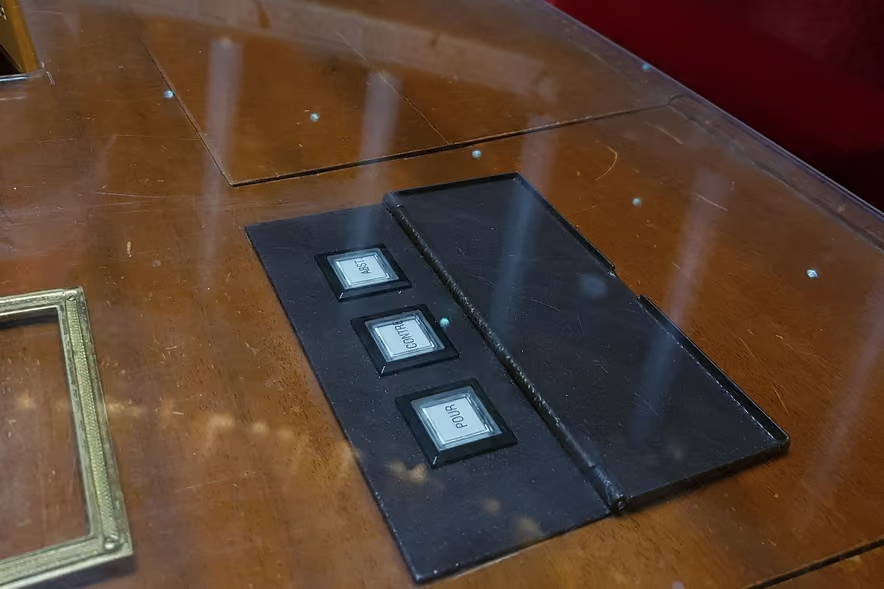
What the law actually bans
Championed by deputy Laure Miller, the law bans under-15s from signing up to any social network, with a few exceptions like online encyclopedias and open educational projects2. New accounts are covered from September 1, 2026, existing ones from January 1, 2027. That gives platforms four months to check the age of everyone already signed up. Along the way, the text also bans phones in high schools, as is already the case in elementary and middle schools. Socialist deputies have referred the law to the Constitutional Council, which has a month to rule1.
The science sides with the lawmakers
On this part, I have no doubts. Anses, France's health safety agency, published a review on 11-to-17-year-olds in January. It describes a cluster of risks rather than one single harm, wrecked sleep, poor self-image and body image, cyberbullying, risky behavior. The effects stack up in the most vulnerable kids and hit girls harder3. Separately, a team from the Paris hospital system and Inserm, France's medical research institute, simulated the lives of 18.6 million adolescents. Their model links excessive social media use to 590,000 additional cases of depression4. But the number that stopped me was another one. Among French teens, depression affected 2% of them each year in 2014, and 9% in 2021.
Careful not to jump to conclusions, though, because the research is less clear-cut than the op-eds. Back in 2019, Amy Orben and Andrew Przybylski showed, across more than 350,000 adolescents, that screens explained at most 0.4% of the differences in well-being. Less than regularly eating potatoes, and wearing glasses mattered more5. The authors of the French simulation admit their model doesn't prove cause and effect either. Basically, the average effect is modest, but it turns severe for a minority. That's the classic shape of a public health problem, and incidentally of a subject that's easy to caricature in both directions.
My conviction comes down to that minority. A kid with people around, whose parents pay attention and know when to cut it off, will probably be fine. The one who discovers a bottomless feed alone at eleven has nobody to do that. A general rule makes sense for that kid.
Australia already ran the experiment
Except the experiment already exists, and the results don't make a strong case for it working. Australia has banned social media for under-16s since December 10, 2025, TikTok, Instagram, YouTube, the works. Researchers surveyed 408 teens right before the ban and again three months later, and published their results in The BMJ, a major medical journal, in June6.
Three months in, more than 85% of under-16s were still using the targeted platforms7. And the most telling part is that most of them didn't need any tricks. The platforms simply hadn't found or deleted their accounts. The sample is small and based on what the teens reported, as the authors themselves point out, and any real effect will probably take years to show. But three months in, Australia's law had mostly pushed VPN apps up the app store charts.
The law lost its enforcer along the way
The most surprising part is what disappeared in the process. The joint committee, where seven deputies and seven senators hammer out the final version, removed Arcom from the text. That's the French media and digital regulator, which was supposed to flag risky platforms and penalize the ones that didn't comply. The rapporteur explained that a blacklist of banned networks would put France at odds with the EU's Digital Services Act2. Fair enough as an argument. The result, much less so. Socialist senator David Ros put it bluntly, there's no method left to check ages and no penalty.
What's left is the obligation itself, plus the hope that an EU regulation expected within a year will fill the gap. A law that bans something without saying how looks an awful lot like a wish. And wishes have rarely stopped a determined teenager from creating an account.
My ID, held by whom exactly?
That's the other half of my unease, and it's not just about teenagers. Checking everyone's age means someone, somewhere, looks at an ID or a face. And that someone is now an industry. Persona, one of its most visible players, already verifies Reddit and Roblox users. The company has raised $350 million from Founders Fund, the firm run by Peter Thiel, co-founder of Palantir, an American data analytics giant8. Discord tested it in the UK before dropping it in February, the backlash having moved faster than the rollout9.
And the worst-case scenario has already happened. In October 2025, a Discord contractor handling age checks got hacked. Around 70,000 users had their ID photos potentially exposed10. You can't change your ID like a password. I'd really rather not find mine in a catalog sold by the pound.
The worst part is that France already has the right technical answer. Arcom's standard, approved by CNIL, the French data protection authority, has applied to porn sites since January 2025. It requires double anonymity. The site learns you're an adult without knowing who you are, and the verifier knows who you are without knowing where you're going11. That's exactly what should be rolled out everywhere. And it's exactly what the new law doesn't mention anywhere, since it sent away the very agency that wrote it.
As for whether blocking works, we already know. When age checks became mandatory on porn sites, Pornhub's parent company chose to pull out of France. VPN installs, those services that make it look like you're connecting from another country, jumped more than 300% in two days12. A fourteen-year-old discovering VPNs thanks to a law meant to protect him, now there's an educational outcome nobody planned for.
What I'm still hoping for
Don't take my skepticism for opposition. The health findings are solid, doing nothing had gone on long enough, and I'd rather have an imperfect law than three more years of parliamentary reports. My daughter isn't old enough to ask me about any of this yet, and we share our controllers without any algorithm getting involved. But that day will come sooner than I think, and if you're a parent, you know that as well as I do.
Until then, everything will be decided in the implementing decrees and the EU regulation, in other words, in the documents nobody reads. I'd like to see double anonymity in there, a requirement to keep nothing, and real oversight. Otherwise we'll have banned social media for teens and handed our IDs to companies we don't know. A lot of damage for a problem we won't have solved.
Notes
-
LCP, "Interdiction des réseaux sociaux aux moins de 15 ans, ce que contient la loi qui vient d'être définitivement adoptée", and Touteleurope, "Les députés et sénateurs français approuvent l'interdiction de l'accès aux réseaux sociaux pour les moins de 15 ans" (both in French). ↩ ↩2
-
Public Sénat, "Réseaux sociaux, députés et sénateurs s'accordent sur une interdiction totale aux moins de 15 ans" (in French). La Quadrature du Net makes a broader case against the text in "Le Parlement vote l'interdiction des réseaux sociaux aux jeunes de moins de 15 ans" (in French). ↩ ↩2
-
Anses, "Avis et rapport sur les usages des réseaux sociaux numériques et santé des adolescents" (in French), published January 13, 2026. The agency recommends acting at the source, opening only platforms designed and configured to protect adolescent health. ↩
-
Nicolas Hoertel et al., "Impact of excessive social media use on adolescent depression and its consequences in France, an individual-based microsimulation model", PLoS Medicine, October 2025, with a summary on the AP-HP site (in French). The simulated adolescents were born between 1990 and 2012. ↩
-
Amy Orben and Andrew K. Przybylski, "The association between adolescent well-being and digital technology use", Nature Human Behaviour, 2019. To my knowledge, the potato has never been the subject of a ban. ↩
-
The study ran in The BMJ on June 24, 2026, under DOI 10.1136/bmj-2026-363695. The teens surveyed were 12 to 17 and mostly lived in New South Wales. ↩
-
Between half and two thirds of them from their own account. Daily use among 14-to-15-year-olds went from 78% to 69%, among 12-to-13-year-olds it didn't move, and among over-16s it rose from 80% to 89%. Fake accounts involved 15 to 19% of respondents, private browsing 6 to 11%. ↩
-
Open Rights Group, "Roblox, Reddit and Discord users compelled to use biometric ID system backed by Palantir co-founder Peter Thiel". Persona raised $150 million, then $200 million, and runs 269 separate checks per identity. ↩
-
PC Gamer, "Discord's age verification rollout has ties to Palantir co-founder Peter Thiel". ↩
-
NBC News, "70,000 government ID photos exposed in Discord user hack", and Next, "Discord reconnaît une fuite de données personnelles et de documents internes" (in French). The attackers claimed a much bigger haul. ↩
-
CNIL, "Vérification de l'âge en ligne, la CNIL rend son avis sur le référentiel de l'Arcom" (in French). Bird & Bird lays out the compliance timeline in "Double vérification de l'âge en ligne, une obligation effective depuis le 11 janvier 2025" (in French). ↩
-
It-Connect, "Blocage des sites pornographiques, les Français se tournent vers les VPN" (in French), citing figures from Top10VPN, Proton VPN and NordVPN. One provider even reported ten times more sign-ups. ↩